
What changed
Agentic AI is reigniting the debate over whether enterprises should rent or own compute resources, with the model plane — the layer that determines where AI models run — becoming a central factor.
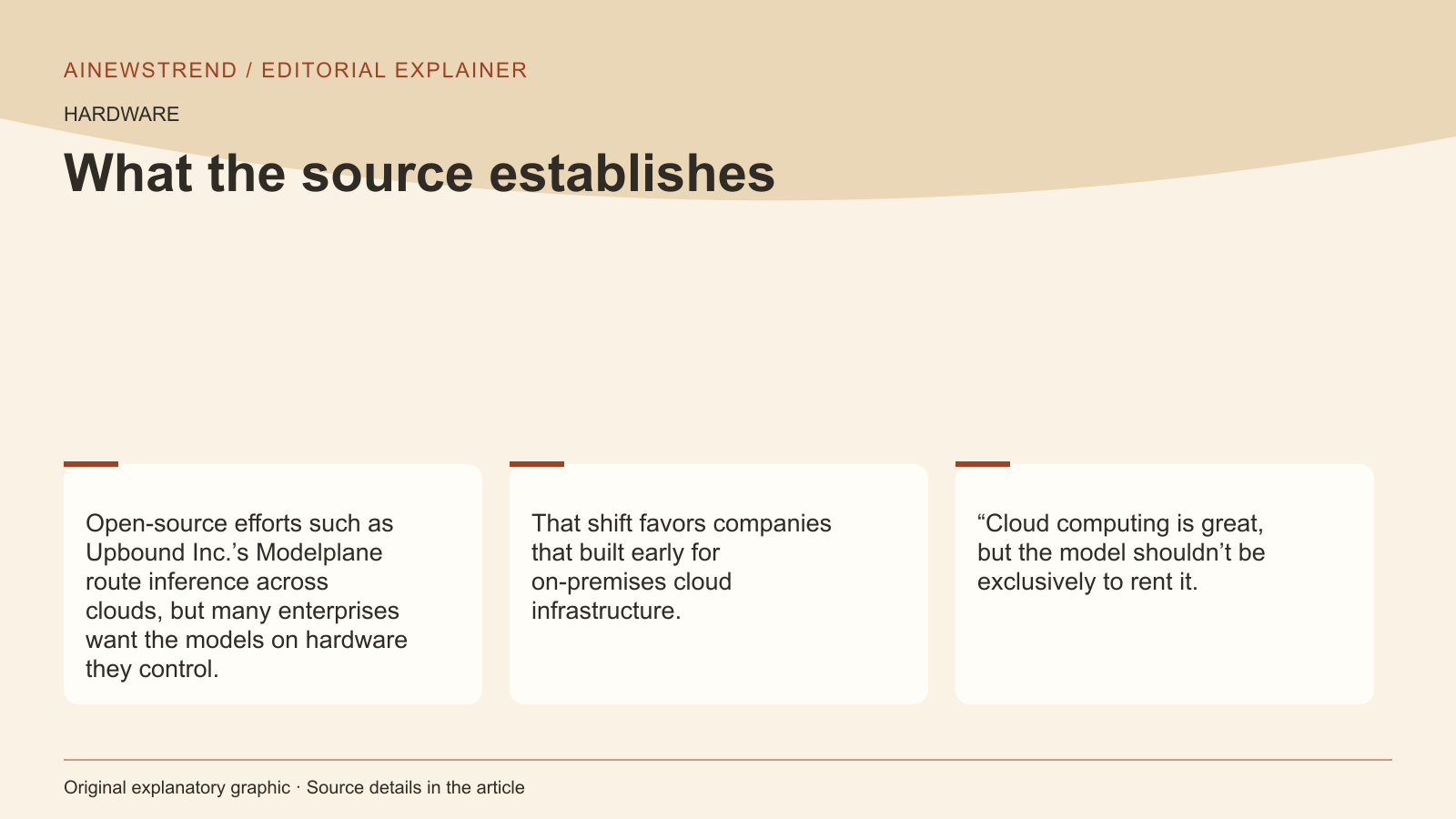
Open-source initiatives like Upbound Inc.'s Modelplane enable inference across clouds, but many enterprises are opting to run models on hardware they control.
This shift is favoring companies that have built early infrastructure for on-premises cloud solutions, such as Oxide Computer Co., which raised $445 million in October to expand rack production.
What this means in practice
Oxide Computer's co-founder and chief technology officer, Bryan Cantrill, explained that while cloud computing is valuable, enterprises at scale often prefer to own their compute resources.
He noted that agentic workloads — which are CPU-intensive and often require high levels of control — are driving this trend. These workloads are increasingly being moved on-premises, where companies can manage data governance and security more effectively.
Cantrill emphasized that security is a key driver for on-premises deployment. Oxide's design choices, such as removing the UEFI BIOS and baseboard management controller from its racks, reduce the attack surface and enable cloud-grade multi-tenancy. This allows enterprises to isolate agentic workloads while sharing resources without compromising confidentiality.
Limitations and availability
The supplied announcement does not specify exact hardware requirements or licensing conditions for Oxide's solutions. However, Cantrill mentioned that the same racks can support legacy virtualization workloads from customers dissatisfied with VMware's pricing changes.
This flexibility allows enterprises to run both old and new applications on a single platform, combining the benefits of elastic compute with the advantages of on-premises control.
The shift toward on-premises compute for agentic AI reflects a broader trend in enterprise IT, where economic, security, and latency considerations are pushing companies to take more control over their infrastructure.