
What changed
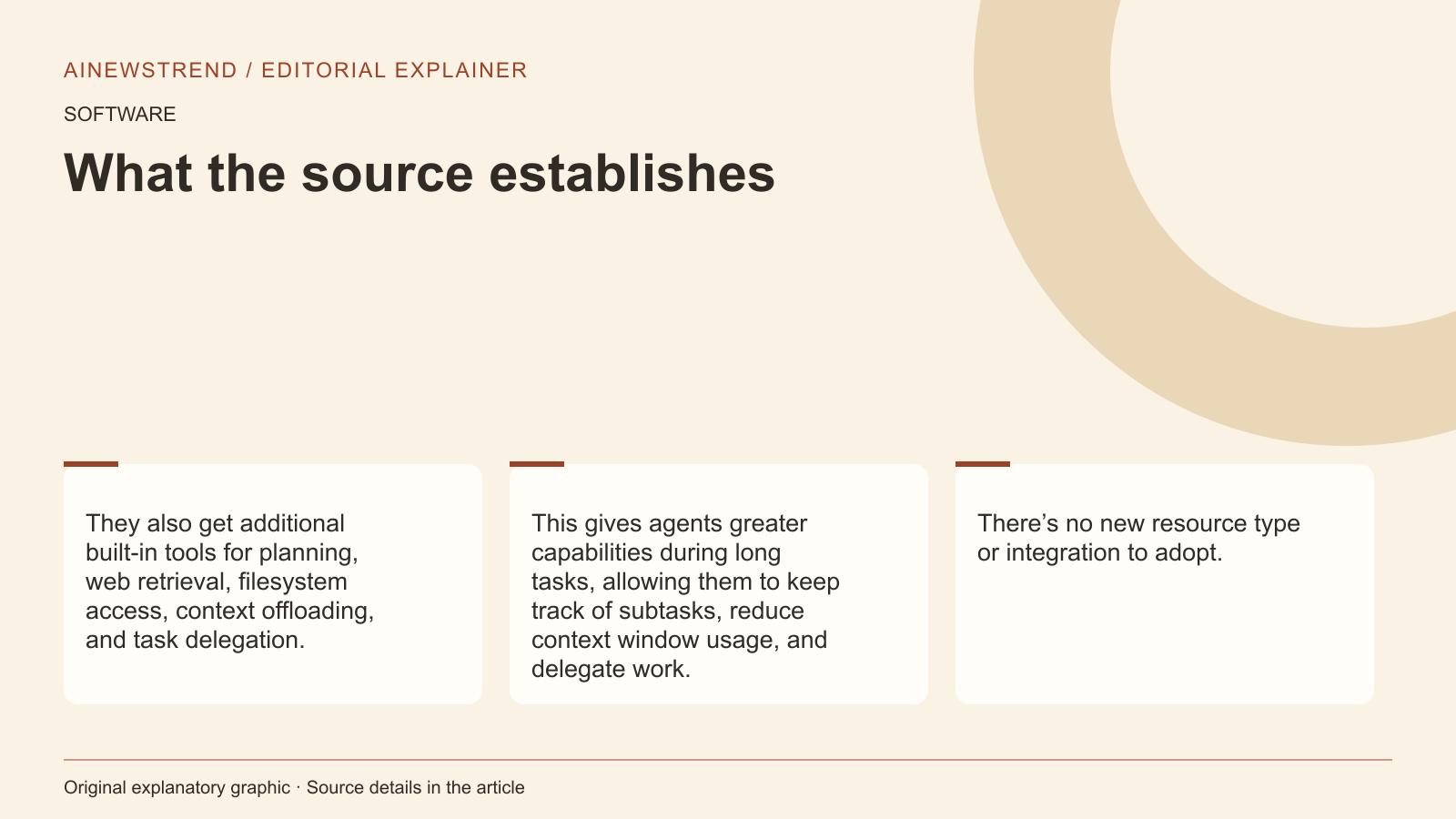
Amazon Bedrock is upgrading its AgentCore harness to integrate Strands harness defaults, built-in tools, and lifecycle hooks. This update provides agents with a recommended model, task-oriented system prompts, automatic prompt caching, and proactive context management. It also introduces additional built-in tools for planning, web retrieval, filesystem access, context offloading, and task delegation.
What this means in practice
The upgrade allows agents to manage long tasks more effectively by tracking subtasks, reducing context window usage, and delegating work. Lifecycle hooks enable deterministic checks and notifications at defined points in the agent loop, transforming non-deterministic AI behavior into predictable workflows. These changes are available automatically to users already employing the AgentCore harness, without requiring new resource types or integrations.
Limitations and availability
The supplied announcement does not specify exact performance benchmarks or independent testing results. The new features are available as part of the existing AgentCore harness, with no additional setup required. Users retain control over models, instructions, tools, and lifecycle policies while AgentCore manages the execution environment. The recommended model and system prompt evolve as new models are released, but explicit configurations can override these defaults.