
What changed
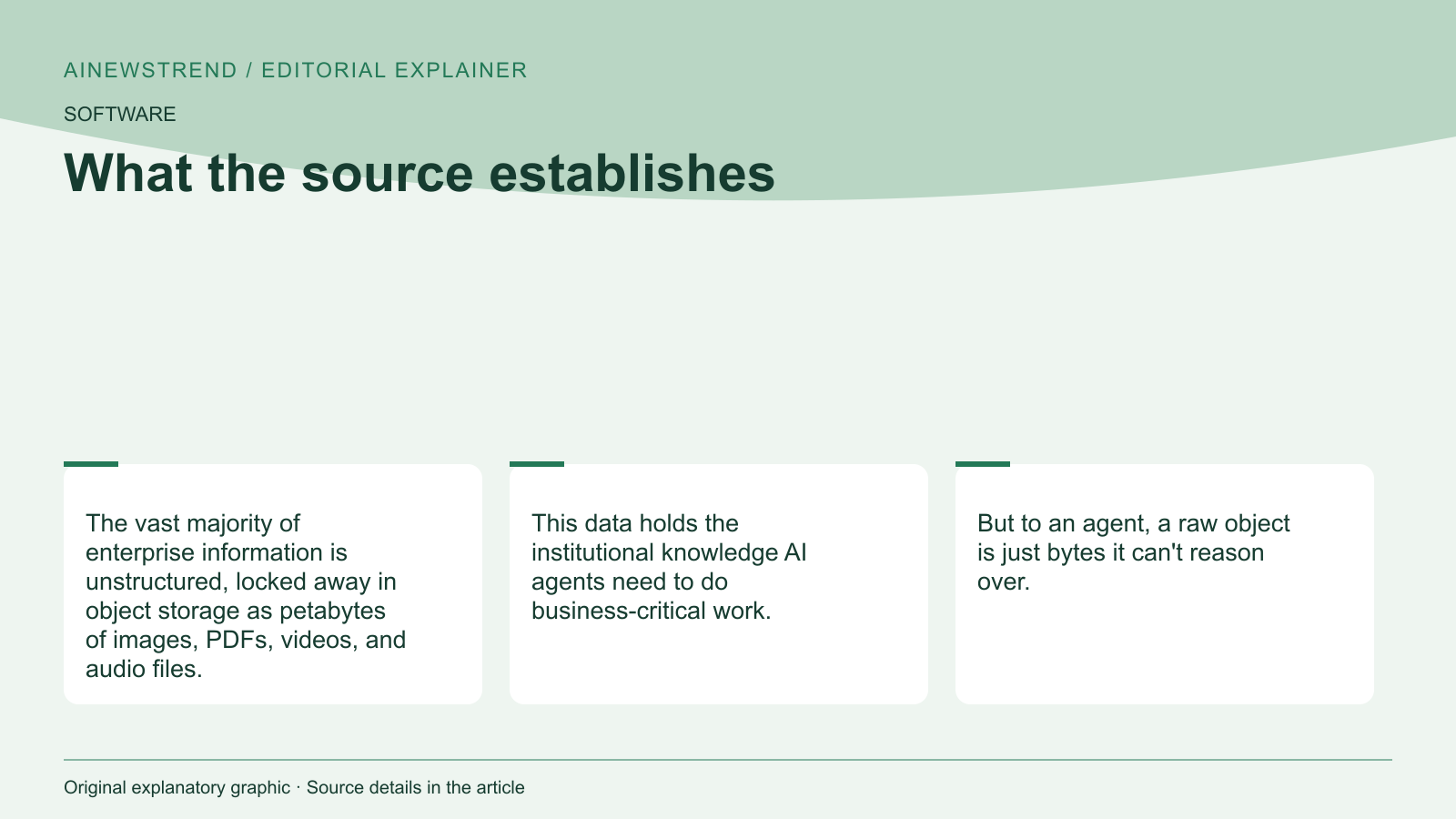
Google Cloud has introduced object enrichments, a new feature in Google Cloud Storage that uses AI models to automatically extract contextual metadata from unstructured data such as images, PDFs, videos, and audio files. This metadata is saved in-place as object context, making it accessible to AI agents for complex decision-making. The service is available in preview and includes high-quality AI models used internally by Google, such as those in Google Photos, offering image annotations at 75% lower cost compared to similar services from other cloud providers.
What this means in practice
The service enables enterprises to transform raw unstructured data into an AI-ready foundation by providing rich, contextual metadata directly with the data. This eliminates the need for separate data stores and reduces the operational complexity of managing metadata. For example, L’Oreal reported that object enrichments allows them to label their creative asset repository 100 times faster at a fraction of the cost of existing processes. The service also integrates with Gemini for advanced multimodal reasoning across text, PDFs, images, audio, and video, unlocking use cases like summarization and translation.
Limitations and availability
Object enrichments is currently available in preview and requires users to define their scope, choose models, and grant IAM permissions to access Cloud Storage buckets. The service handles model inference, parsing, and writing results to object context without requiring custom pipelines or code. While the PDF classification model is available, the Gemini integration is an upcoming functionality that requires reaching out to Google for access. The service is designed to scale to millions or billions of objects and includes built-in retries and throttling to ensure reliability.