
What changed
On November 19, 2026, OpenAI announced the launch of the Performance Factory, an autonomous system that leverages Codex to automate the detection and resolution of performance regressions. This system enables OpenAI to keep pace with the rapid development of agentic workflows by streamlining the process of identifying and fixing slowdowns in services like ChatGPT.
What this means in practice
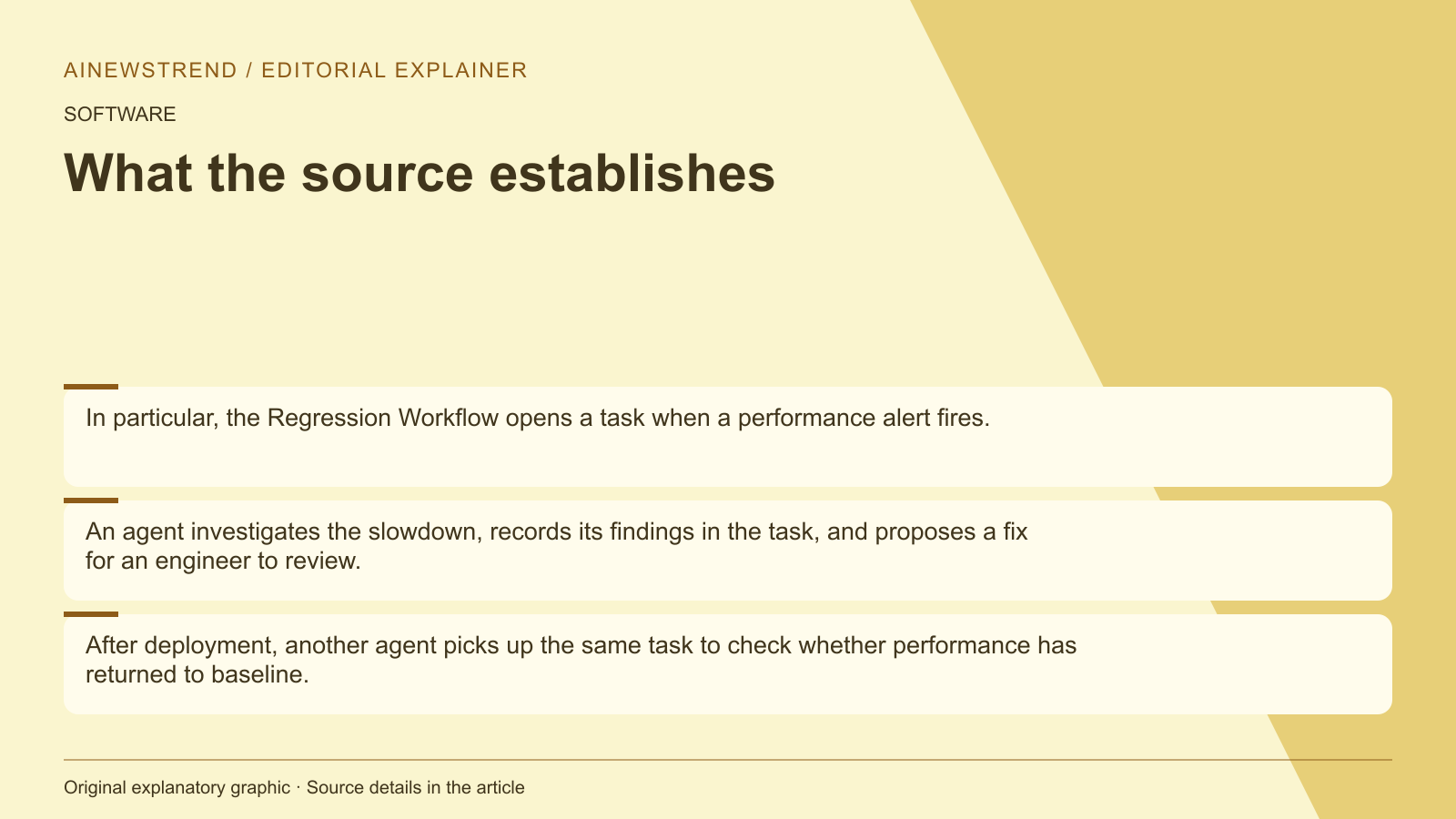
The Performance Factory operates by defining workflows for recurring tasks and instructing Codex agents to execute them. When a performance alert is triggered, an agent investigates the slowdown, records findings, and proposes a fix for review. After deployment, another agent verifies if performance has returned to baseline. This workflow has already tracked over 1,700 investigations and resolved more than 600 cases in just over three months, with 17 automated investigations per day.
The system includes four main components: a task service with configurable workflows, a dispatch loop that assigns tasks to agents, an API for running Codex in the cloud, and subscriptions that notify agents of changes such as deployment completions or GitHub review comments.
Engineers define workflows using configuration files and Markdown prompts, which guide agents through specific steps. The task service provides visibility into workflows, allowing engineers to track progress and collaborate.
Limitations and availability
The Performance Factory is currently operational within OpenAI's internal infrastructure and is designed to run end-to-end agentic performance engineering workflows. While the system automates much of the process, it still requires human oversight for reviewing proposed fixes and verifying performance recovery. The supplied announcement does not specify whether the system is available for external use or how it integrates with third-party services.