
What changed
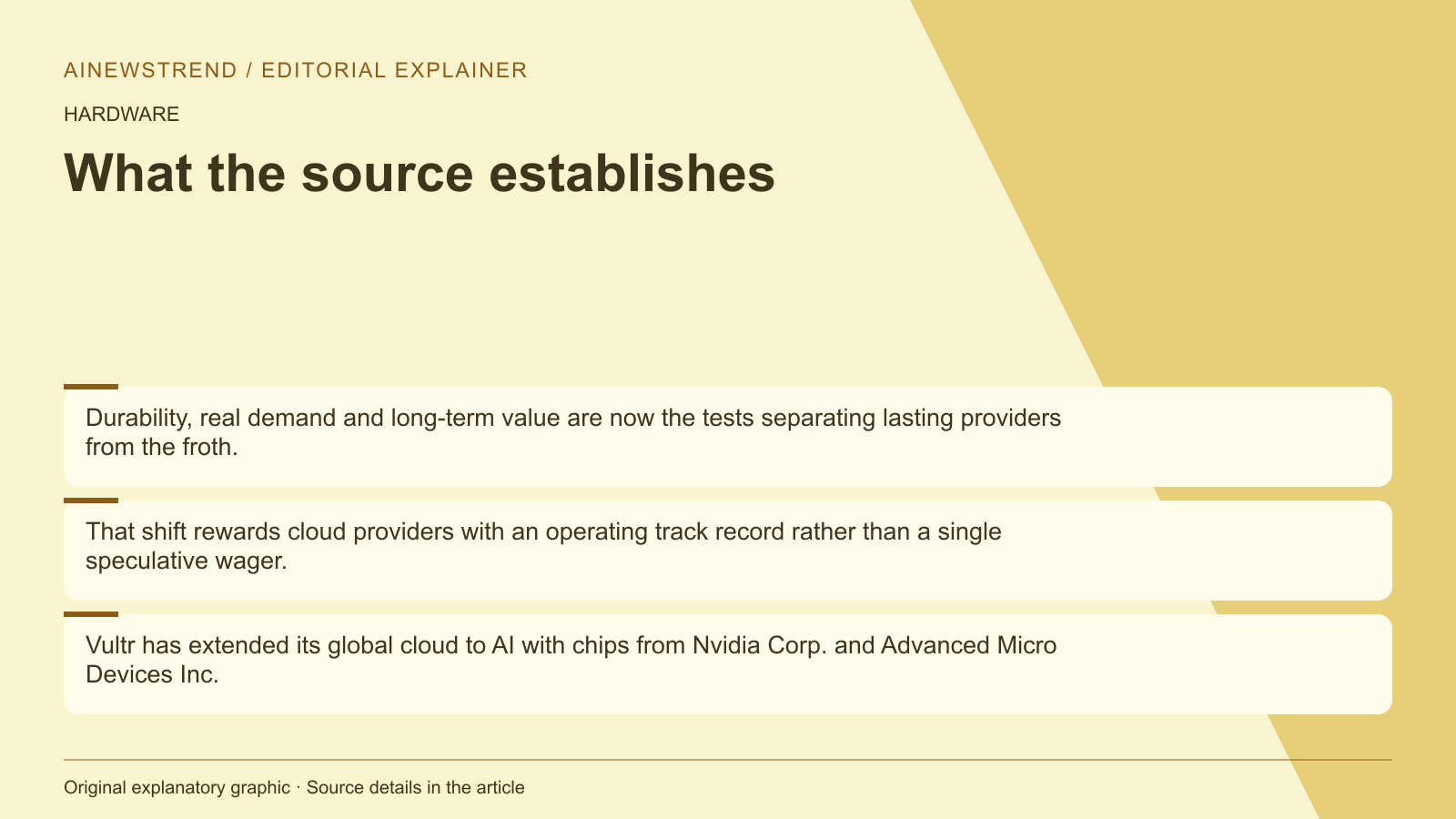
Vultr has extended its global cloud infrastructure to support AI workloads using chips from Nvidia and AMD. The company now operates 34 cloud data center regions, including a new one in Chennai, India. Kevin Cochrane, chief marketing officer of Vultr, noted that enterprises are moving away from speculative AI investments toward platforms with proven economic returns and ROI.
What this means in practice
The shift reflects a broader industry trend toward durable, cost-efficient AI infrastructure. Vultr's global footprint allows enterprises to deploy AI applications closer to users, reducing latency and enabling faster inference. Cochrane emphasized that this approach supports a 'true global cloud platform' rather than isolated data centers serving specific customers. The company's strategy aligns with the growing need for localized AI training, particularly in regulated industries like finance, where data sovereignty constraints require regional model training.
Limitations and availability
The supplied announcement does not specify exact hardware requirements or licensing conditions for Vultr's AI infrastructure. While the company highlights its global cloud platform, the availability of AI-specific features or APIs is not detailed. Sovereignty requirements and regional data regulations are expected to influence the deployment of AI models, but the exact impact on Vultr's offerings remains unspecified.